NavSense: Health Wearable Technology
Client
Nuvu Health Technology Studio
DELIVERABLES
Product Design
Year
2021
Role
Member
overview
In 2021, I participated in a design studio led by Jenny Kinrad from MIT. The project focused on identifying global challenges that impact quality of life and translating abstract problems into tangible, human-centered solutions through research, prototyping, and iteration.
problem framing
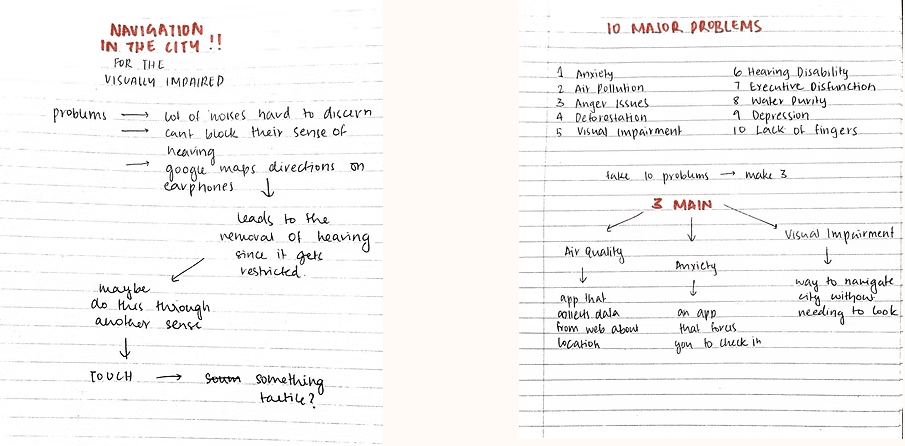
The studio began with a broad systems-thinking exercise: identifying ten major global challenges that affect people’s everyday lives. From these, I shortlisted three issues that resonated most with me and explored how design and technology could meaningfully support individuals navigating them.
Through this process, I became particularly interested in challenges faced by differently-abled individuals—specifically how assistive products can enhance ability without drawing attention or disrupting daily routines.
research and inspiration
To ground our ideas technically, we spent several days learning the fundamentals of Arduino and breadboarding, working hands-on with basic circuitry, lights, and wiring. In parallel, we analyzed existing health and wearable technologies.
One wearable stood out as a key inspiration: its minimalist design enhanced the user’s abilities while remaining discreet and non-intrusive. This approach shaped my core design principle, assistive technology should support users quietly, without redefining their identity or interrupting their everyday activities.
Ideation & Storyboarding
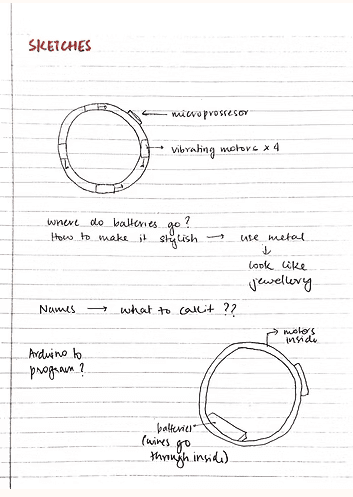
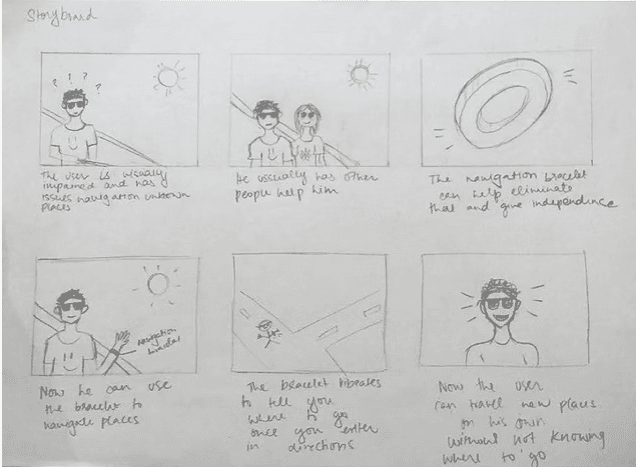
Using sketches and storyboards, I explored how a wearable device could function naturally within real-life scenarios. The focus was on:
Ease of wear
Minimal physical and visual intrusion
Seamless integration into daily movement
Storyboarding helped test these ideas early, allowing me to evaluate usability and context before moving into physical making.
Prototyping & Iteration
I developed three successive prototypes, each iteration building on feedback from peers and instructors.
Prototype 1: Focused on bare form
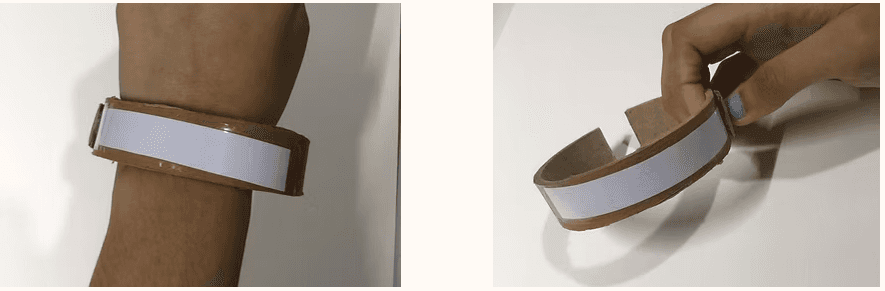
Prototype 2: Added placement for certain elements
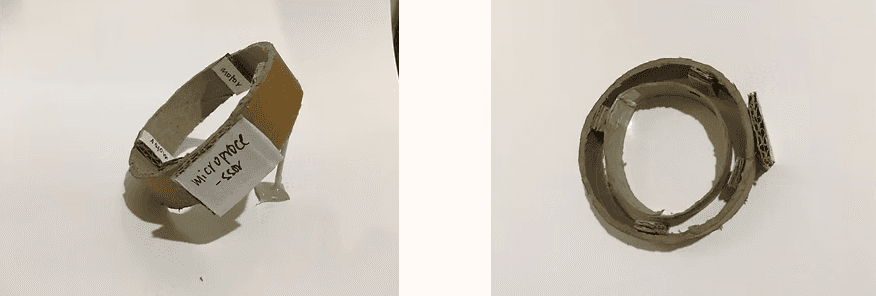
Prototype 3: Made it usable with a coded microcontroller
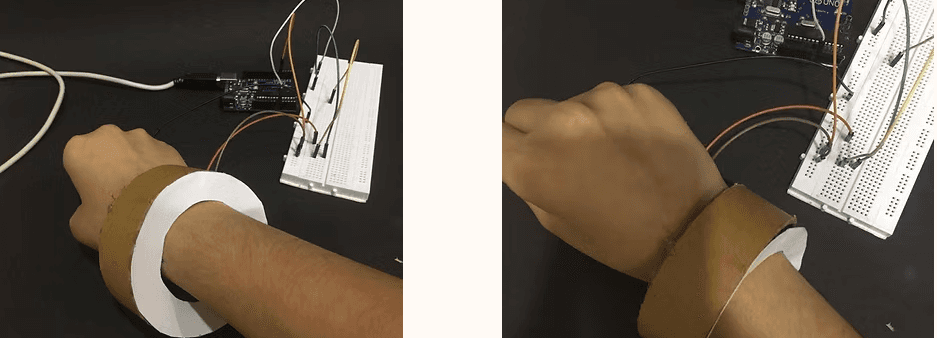
final product and feedback
The final prototype was presented to a panel of judges for critique. The feedback highlighted several strengths:
The wearable was described as fitting “like a cuff,” making it easy to wear and carry
It successfully functioned without interfering with the user’s hearing
The design felt practical and grounded in real use cases
Constructive feedback focused on scale, the device, while compact, was still perceived as somewhat bulky. Judges suggested that future iterations could further reduce size as technology and components evolve.
key learnings
This project reinforced several foundational design lessons:
The value of iterative prototyping over pursuing a “perfect” first solution
The importance of user-centered feedback in shaping meaningful outcomes
How critical it is to balance functionality, simplicity, and dignity when designing assistive technology
This experience continues to influence how I approach design problems—starting broad, grounding ideas in real human needs, and refining solutions through thoughtful iteration.